Learning without internet doesn’t have to be difficult or boring for kids. In fact, some of the best learning experiences happen when screens are off and curiosity takes over!
While the internet offers endless educational resources, what happens when the Wi-Fi goes down, an emergency disrupts internet access, or the latest cybersecurity hack makes online learning platforms unavailable?
The good news is that kids don’t need Wi-Fi, apps, computer classes, or online videos to continue learning. They can build important skills and have fun with these learning tools and education ideas.
Plan NOW in case technology and online resources are no longer an option.
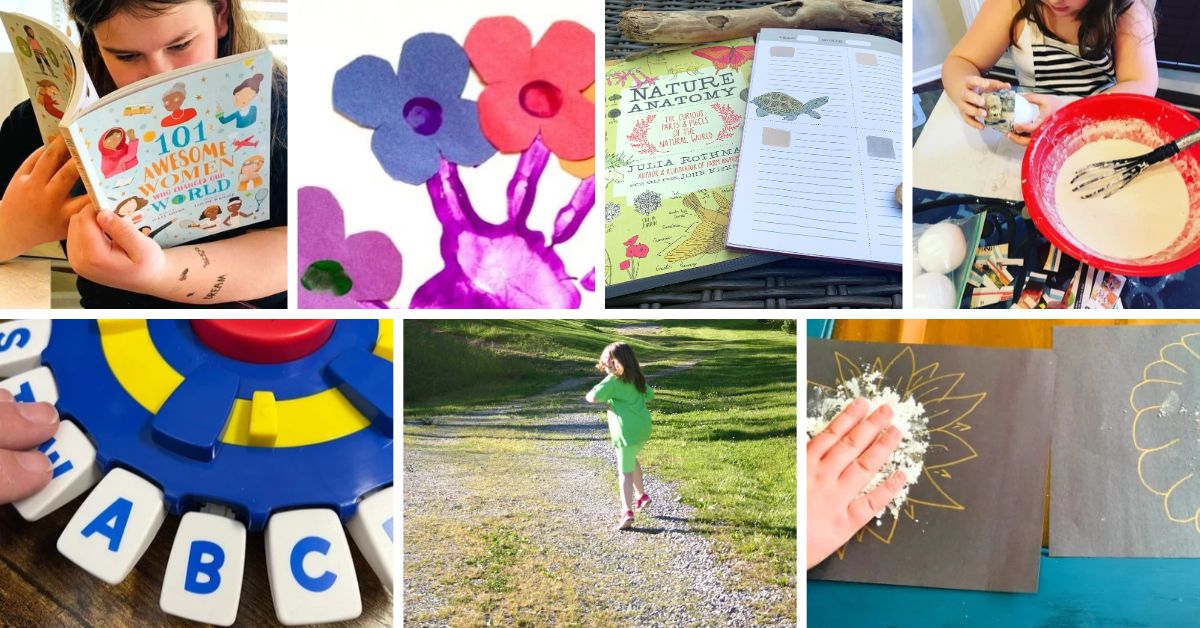
The Best Ideas for Learning Without Internet
Parents and teachers can keep education going with simple, hands-on offline learning activities like reading books, exploring nature, playing educational games, getting creative, and discovering how things work.
Whether you’re preparing for unexpected internet outages, looking for screen-free learning activities, or searching for practical ways to teach kids without technology, having a few offline education ideas ready can make all the difference if you need some internet-free ideas last minute.
Here are ideas for no-internet remote learning activities and ways to keep homeschooling without going online…
Quick Look: Practical & Effective Ways to Learn Without Internet Access
- Visit the Library: Borrow books, explore new subjects, and participate in free educational programs – all internet free!
- Play Educational Games: Use board games, card games, and word games to practice math, reading, and critical thinking.
- Read and Write: Encourage independent reading, creative storytelling, journaling, and letter writing.
- Explore Nature: Take nature walks, identify plants and animals, start a garden, or keep a nature journal.
- Try Science Experiments: Discover science through simple, hands-on experiments using everyday household materials.
- Get Creative with Arts and Crafts: Encourage imagination and problem-solving through drawing, painting, building, and crafting.
- Cook and Bake Together: Practice math, measuring, reading, and following directions while preparing meals.
- Build and Create: Use LEGO bricks, cardboard, and recycled materials for fun STEM and engineering challenges.
- Explore Music and Drama: Learn songs, play instruments, create homemade music, or put on a play.
- Discover History and Geography: Explore maps, create timelines, visit historical sites, and learn about different cultures.
- Practice Everyday Life Skills: Teach kids budgeting, organizing, time management, and age-appropriate household skills.
- Explore Community Resources: Visit museums, parks, community centers, and local educational events.
- Solve Puzzles and Brain Teasers: Strengthen memory, logic, concentration, and problem-solving with screen-free challenges.
- Use Offline Educational Resources: PRINT THEM NOW! Keep printable worksheets, workbooks, flashcards, and downloaded educational materials in a binder ready for internet outages.
- Create an Offline Learning Kit: Prepare a grab-and-go collection of books, games, art supplies, puzzles, and hands-on activities for learning without Wi-Fi. LEARN HOW TO CREATE AN OFFLINE LEARNING KIT HERE.
KEEP SCROLLING for the full list of tips & ideas to learn when internet is down or when you don’t have access to online learning resources.

This guide shares fun, easy, and effective ways to help kids continue learning without internet access, no matter what comes your way.
75 Effective Ways Kids Can Learn Without Internet: Offline Learning Activities and Resources That Are Better Than You Think!
Whether the Wi-Fi is down, online learning platforms are unavailable, or you simply want to give kids a break from screens, there are plenty of fun and educational ways to keep them learning.
These offline learning activities help parents and teachers encourage creativity, critical thinking, problem-solving, and hands-on discovery without relying on technology.
Library: Discover a World of Offline Learning … Mostly for FREE!
Libraries are still one of the best free educational resources for learning without internet access (also, if you lost internet access at your house but internet is still up in your area, you can use it for free with your library card!).
Plus, libraries now have so many other things to check out besides just books: games, movies, puzzles, and many even have home goods and craft supplies you can check out!
Here’s how to use your local library for learning without the internet:
- Explore new books: Let kids choose books about subjects that spark their curiosity.
- Join library programs: Look for story times, book clubs, craft workshops, classes, and educational events — many are free or low-cost alternatives!
- Try a reading challenge: Set weekly reading goals and reward progress. Make your own graphs to track your challenge goals.
- Research without Google: Teach kids how to find information using encyclopedias, dictionaries, and reference books. Make it a scavenger hunt to see how can find all the information at the library without using the internet.
- Borrow educational kits: Some libraries offer science kits, puzzles, board games, and other hands-on learning resources. Just ask what they have available. (You’ll be surprised)
Games: Make Learning Fun Without Wi-Fi

Educational games are a great way to build important skills while keeping kids entertained without screens and gameschooling is one of my favorite ways to learn, especially when there are internet outages.
PRO LEARNING TIP: Check Goodwill and thrift stores. I get great games (many still in the package and unopened or barely used!) for less than $5!
How to use games for learning without the internet:
- Board games: Practice math, strategy, reading, and decision-making with games like Monopoly, Scrabble, and chess.
- Card games: Build memory, number recognition, and critical thinking skills. (Definitely add this card game!)
- Word games: Play spelling bees, Tapple, word searches, crossword puzzles, or vocabulary challenges.
- Math games: Use dice, playing cards, or homemade bingo boards to practice math skills.
- Trivia challenges: Test knowledge about science, history, geography, and other subjects.
- Scavenger hunts: Create clues that encourage reading, problem-solving, and observation.
CHECK OUT THESE FUN GAMES FOR LEARNING:
- Top 10 Family Board Games In Our House
- Best Games For Science Learning That You’ve Never Heard Of!
- 17 Math Games That Are Cool & FUN To Play with Kids
- Learning Chess for Kids: Beginner Tips
- How To Play Dominoes
Reading and Writing: Build Literacy Skills Offline
Reading and writing are essential skills kids can practice anywhere, making them perfect for learning without internet (and, honestly, way more fun to do without the internet!).
Tips for learning reading & writing without the internet:
- Start a daily journal: Encourage kids to write about their experiences, ideas, and observations.
- Create homemade books: Write and illustrate original stories.
- Write letters: Practice communication skills by sending letters to friends or family and then mail them the good old-fashioned snail mail way! (Kids love picking out stamps at the post office!).
- Make comic strips: Combine storytelling, writing, and drawing.
- Read aloud together: Improve vocabulary, comprehension, and listening skills.
- Create a family newspaper: Have kids write articles, conduct interviews, and report on family activities. Kids can then mail them to grandparents, aunts and uncles, or cousins.
- Listen to kids’ podcasts like this and then discuss or write what you learned.
ALSO: THIS IS MY BEST TIP FOR READING THAT CHANGED EVERYTHING FOR MY DAUGHTER
Nature and Outdoor Exploration: Turn the Outdoors Into a Classroom

Outdoor activities offer endless opportunities for hands-on learning without technology.
Here’s how to add nature learning to your offline ideas:
- Go on nature walks: Identify plants, animals, insects, and natural features.
- Start a garden: Even in the winter (indoors). Even on your windowsill or balcony. Learn about plant growth, ecosystems, and responsibility.
- Keep a nature journal: Record weather patterns, wildlife sightings, and seasonal changes in your own background or weekly at a local park.
- Collect and classify: Sort rocks, leaves, or shells by size, shape, and color.
- Explore the weather: Make simple weather instruments and track daily conditions.
- Practice outdoor math: Measure trees, estimate distances, or count objects in nature.
LEARN HOW: Make a DIY Barefoot Sensory Path Ideas for Outdoor Play and Nature Learning
Science Experiments: Encourage Hands-On STEM Projects Without Going Online
Simple science experiments help kids develop curiosity and problem-solving skills without online videos or digital tools.
Here are fun ideas for science resources without using the internet:
- Kitchen science: Explore chemical reactions with baking soda and vinegar or make recipes to practice math, teamwork, reading & more.
- Build paper airplanes: Experiment with aerodynamics and flight.
- Grow seeds: Observe how plants develop under different conditions.
- Explore magnets: Discover magnetic attraction and repulsion.
- Investigate shadows: Explore how sunlight changes throughout the day. Trace outlines of objects at different times throughout the day.
- Build with LEGO bricks: Explore design, balance, and engineering.
- Create cardboard structures: Design houses, bridges, towers, or miniature cities.
- Make marble runs: Explore gravity, motion, and cause and effect.
Arts and Crafts: Inspire Creativity Without Screens

Creative projects encourage imagination, fine motor skills, and self-expression and, honestly, it’s best done offline anyway (imo).
Here’s how to amp up your offline art learning with hands-on projects and crafts:
- Draw and paint: Experiment with different artistic techniques.
- Make recycled crafts: Turn cardboard, paper you have at home to make this, and household materials into creative projects.
- Create sculptures: Use clay, playdough, or modeling materials.
- Try origami: Practice following directions and spatial reasoning.
- Design greeting cards: Combine art, writing, and creativity.
- Create a family art gallery: Display artwork and encourage kids to explain their creations.
Check out these craft & read ideas: Roald Dahl Book Activities, Lessons and Crafts for Kids
Cooking and Baking: Learn Real-Life Skills Without The Internet

The kitchen is a fantastic place for kids to practice math, science, reading, and everyday life skills.
Here’s how to add recipes to your learning for kids:
- Follow recipes: Practice reading comprehension and sequencing.
- Measure ingredients: Learn fractions, volume, and basic math.
- Double or halve recipes: Strengthen multiplication and division skills.
- Explore food science: Discover how ingredients change when heated, mixed, or cooled.
- Plan a meal: Practice budgeting, organization, decision-making, and then shopping for ingredients to stay within the budget.
- Create a recipe book: Write down favorite recipes and cooking tips. Kids can even illustrate the recipes!
- Do a recipe and read where you read a book and then make a themed recipe to go with it (this is one of my favorites!)
READ THIS NEXT: Why Cooking With Kids Should Be a PRIORITY (And How to EASILY Do It If You HATE Cooking)
Music and Performing Arts: No-Internet Learning Through Creativity
Music, movement, and performance provide engaging opportunities for offline education.
Here are some fun ways to add music and theater to your offline learning ideas:
- Learn a musical instrument: Practice rhythm, coordination, and patience.
- Create homemade instruments: Explore sound using everyday materials.
- Put on a play: Practice reading, memorization, and public speaking.
- Write original songs: Develop language skills and creativity.
- Explore different rhythms: Practice counting and recognizing patterns.
- Play charades or this fun FISH BOWL GAME: Strengthen communication, imagination, and teamwork.
- Make sound effects for books: give each child a different instrument or tool to make sounds (think: pot with a spoon) and then read a book, allowing each one to make sound effects for the book.
History and Geography: Explore the World Without Google (yes, for real)
Kids can discover fascinating information about the world using books, maps, and hands-on activities.
I think we’ve all become so accustomed to googling things we need that we’ve forgotten how to use offline tools to learn about history & geography:
- Explore printed maps: Learn about countries, states, oceans, and continents.
- Create a family history project: Interview relatives and build a family tree.
- Make historical timelines: Using an encyclopedia, organize important events chronologically on a long art paper roll or by connecting several pieces of paper.
- Study different cultures: Explore traditional foods, celebrations, and customs.
- Create a travel scrapbook: Research destinations using library books and travel guides.
- Visit historical landmarks: Discover local history through real-world experiences.
Life Skills: Learn by Doing
Everyday responsibilities provide valuable opportunities for self-directed learning and independence:
- Practice money management: Use play money to learn budgeting and making change.
- Learn basic sewing: Practice measuring, following instructions, and hand-eye coordination.
- Organize a space: Develop planning, sorting, and organizational skills.
- Learn basic first aid: Practice age-appropriate emergency preparedness skills by checking out a book at the library or looking for an in-person class.
- Practice time management: Create daily schedules and activity plans.
- Learn household skills: Practice measuring, cleaning, organizing, and simple repairs with supervision.
Community Learning: Discover Offline Educational Opportunities Near You with Field Trips & Kids’ Clubs
Learning doesn’t have to happen online or inside a classroom.
Local communities offer valuable offline educational resources:
- Visit museums: Explore science, art, history, and culture.
- Attend community workshops: Learn new skills through hands-on instruction.
- Explore local parks: Discover ecosystems, geography, and wildlife.
- Visit a farmers market: Learn about agriculture, nutrition, and local businesses.
- Meet community helpers: Learn about different careers and public services.
- Join clubs or groups: Participate in scouting, 4-H, gardening clubs, homeschool co-ops, or other educational activities.
MORE EMERGENCY PREPAREDNESS RESOURCES:
50 Best Emergency Preparedness Lesson Plans and Activities for Kids of All Ages Preschool to K12
How To Prepare for Winter Food Shortages This Year
16 Unexpected Items Every Emergency Go Bag for Kids Should Have (#5 Is a Game-Changer!)
Prepare now for internet outages!
I hope you found these learning without internet tips helpful!